Giving and Receiving
Vocabulary
Overview
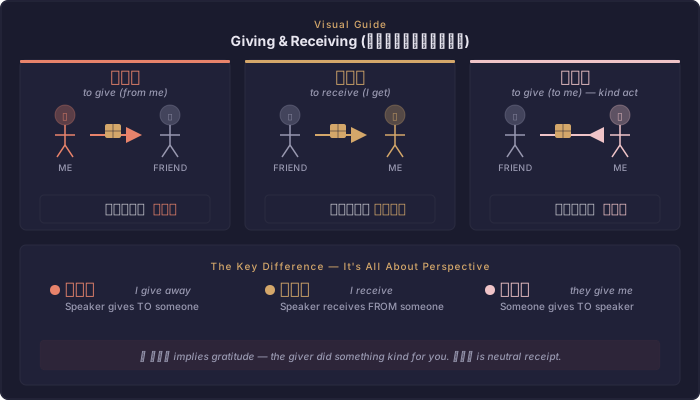
Japanese uses different verbs depending on the direction of the giving—from me to you, you to me, or someone to someone else. The perspective of the speaker matters greatly. This is one of the most important distinctions in Japanese grammar for natural communication.
1. あげる (To Give - FROM me/my group TO others)
Used when:
- I give something to someone else
- Someone in my in-group gives to someone outside
- Describing a general act of giving (not involving the speaker receiving)
Structure: 私は/が ~に ~をあげる
Examples:
Notes:
- “あげる” is neutral and can be used with people at any level
- Use this when YOU are doing the giving
- Works for giving objects, money, time, advice, etc.
2. くれる (To Give - FROM others TO me)
Used when:
- Someone gives something to ME
- Someone does a favor FOR me
- Someone in my in-group gives to me or people close to me
Structure: ~が 私に ~をくれる or ~は 私に ~をくれる
Examples:
Notes:
- “くれる” emphasizes that the giver is doing something kind or considerate FOR you
- Creates a sense of gratitude or appreciation
- Shows that the action benefits the speaker or someone close to them
3. もらう (To Receive - FROM others)
Used when:
- Taking the receiver’s perspective (I received)
- Emphasizing what you got
- Getting something from someone
Structure: 私は ~に/から ~をもらう
Examples:
Notes:
- Can use both に and から to indicate the giver
- Emphasizes the receiver’s perspective
- Shows what one has acquired or obtained
Quick Comparison
| Verb | Giver | Receiver | Example |
|---|---|---|---|
| あげる | I/My group | Someone else | 私は友達に本をあげた。(I gave a book) |
| くれる | Someone else | Me/My group | 友達が私に本をくれた。(My friend gave me a book) |
| もらう | Me/My group | Someone else | 私は友達に本をもらった。(I received a book) |
Action Verbs with Giving Verbs (Te-form)
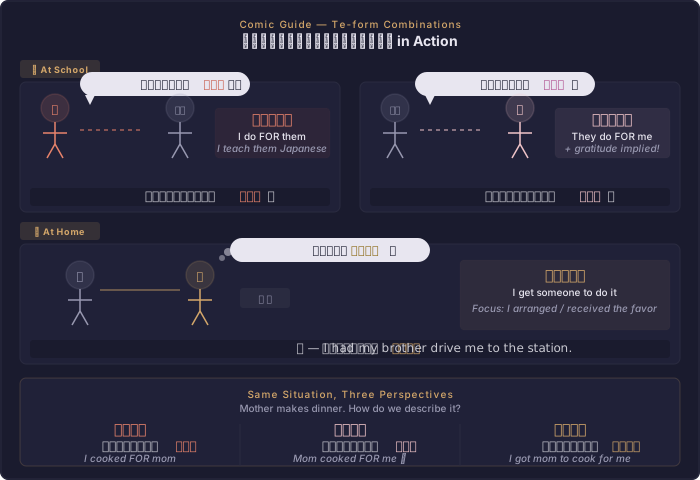
These verbs become incredibly useful when combined with the te-form of action verbs, creating expressions for doing favors and showing relationships.
~てあげる: Do something FOR someone
Express that you are doing an action for someone’s benefit. Shows generosity or help.
~てくれる: Someone does something FOR me
Express that someone is doing an action for your benefit. Implies gratitude and appreciation.
Comparing あげる vs くれる in action:
- 私は兄に英語を教えてあげた。- I taught my older brother English (I did it for him).
- 兄が私に英語を教えてくれた。- My older brother taught me English (He did it for me, kindly).
~てもらう: Get someone to do something FOR me
Express that you are receiving an action or favor. Someone is doing something for you.
Key Takeaways
-
Perspective matters: Ask yourself “Who is receiving the benefit?”
- I’m doing it → あげる
- They’re doing it for me → くれる
- I’m receiving → もらう
-
In-group concept: くれる works for anyone doing something for me or my in-group, showing appreciation
-
Te-form combinations are essential:
- ~てあげる = be generous/kind
- ~てくれる = receive kindness
- ~てもらう = receive a favor
- Tone matters: These verbs carry emotional weight—they show relationships and feelings of gratitude, obligation, or generosity