The Te-form
Vocabulary
食べるた・べるru-verbto eat
飲むの・むu-verbto drink
するirregularto do
来るく・るirregularto come
昼ご飯ひる・ご・はんlunch
寝るね・るru-verbto sleep
待つま・つu-verbto wait
見るみ・るru-verbto see
書くか・くu-verbto write
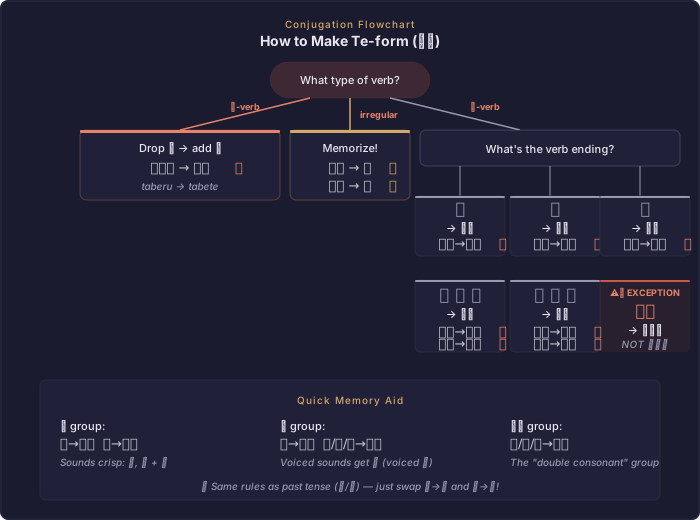
て-form is an incredibly versatile conjugation used for connecting sentences, making requests, and present progressive actions.
Conjugation rules
The rules are exactly the same as the Past Tense, but you replace た with て and だ with で.
Examples
食べる→食べた→食べて
飲む→飲んだ→飲んで
する→した→して
書く→書いた→書いて
Common Usages
1. Sequence of Events
昼ご飯を食べて、寝る。Eat lunch, and then sleep.
本を読んで、勉強する。Read a book, and then study.
起きて、顔を洗う。Wake up and wash my face.
2. Requests
Add ください after the te-form.
来てください。Please come.
待ってください。Please wait.
見てください。Please look.
3. Present Progressive
Add いる after the te-form.
食べている。I am eating.
本を読んでいる。I am reading a book.
友達を待っている。I am waiting for a friend.
Advanced Usages
4. Expressing Cause and Effect (Because/Since)
Te-form can express the reason or cause for something.
雨が降ってきたので、家にいる。It's raining, so I'm staying home.
(Note: This often uses ので as well)
朝寝坊して、学校に遅れた。I overslept, so I was late to school.
(Cause → Result)
仕事が終わって、友達と遊ぶ。After work is done, I'll play with friends.
5. Permission and Prohibition (~てもいい / ~てはいけない)
Te-form + もいい (it’s okay to) or te-form + はいけない (you mustn’t).
ここに座ってもいい。It's okay to sit here.
走ってはいけない。You mustn't run.
質問してもいいですか。May I ask a question? (polite)
映画を見てもいい。It's okay to watch a movie.
6. State or Condition (Results that remain)
Te-form + いる can also show a state that resulted from a past action.
窓が開いている。The window is open. (It was opened and is in that state)
電気がついている。The lights are on. (They were turned on and are in that state)
本が置いてある。There is a book placed (on the table). (Someone put it there)
7. Showing Manner or Method (How you do something)
Te-form can show how or in what manner something is done.
歩いて学校に行く。Go to school by walking.
電話して連絡する。Contact (someone) by calling.
手で食べる。Eat using your hands.
8. Simultaneous Actions (While doing…)
Two actions happening at the same time, expressed with te-form.
音楽を聞いて勉強する。Study while listening to music.
テレビを見て夜ご飯を食べる。Eat dinner while watching TV.
笑ってしゃべる。Talk while laughing.
9. Giving and Receiving (Expressing relationships)
Te-form is used in expressions about giving and receiving help or favors.
友達に手伝ってもらう。Get help from a friend / Have a friend help me.
先生に教えてもらった。I had the teacher teach me. (Someone did something for me)
母に作ってもらう。Have my mother make it (for me).
10. Connecting to Adjectives or Descriptions
Te-form can connect descriptive elements.
背が高くて、髪が長い。(He/she is) tall and has long hair.
美しくて、親切だ。(It is) beautiful and kind.